श्री१
the Dashami morning, when the Goddess is given her farewell (विसर्जन)
ततः प्रातः पूजयित्वा दशम्यां विधिपूर्वकम् । संप्रेषणं तु कर्तव्यं गीतवादित्रनिःस्वनैः ॥
Then, on the morning (प्रातः) of the Dashami (दशमी), Goddess Durga is worshipped by the rule (विधि) and given her farewell (संप्रेषण) with songs and music (गीतवादित्र): this is the morning rite of Vijaya Dashami.
श्री२
the farewell (विसर्जन) — the prayer said as her image goes to the waters
दुर्गे देवि जगन्मातः स्वस्थानं गच्छ पूजिते । संवत्सरे व्यतीते तु पुनरागमनाय वै ॥ इमां पूजां मया देवि यथाशक्त्योपपादिताम् । रक्षार्थं त्वं समादाय व्रज स्वस्थानमुत्तमम् ॥
O Goddess Durga (दुर्गा), Mother of the world (जगन्माता), worshipped one, return to your own abode (स्वस्थान), to come again (पुनरागमन) when a year (संवत्सर) has passed. Taking this worship (पूजा) that I have offered as I was able (यथाशक्ति), O Goddess, return to your own supreme abode, for our protection (रक्षा).
श्री३
the rule of the day — Goddess Aparajita worshipped in the afternoon
दशम्यां तु नरैः सम्यक्पूजनीयाऽपराजिता । ऐशानीं दिशमाश्रित्य अपराह्णे प्रयत्नतः ॥ या पूर्णा नवमीयुक्ता तस्यां पूज्यापराजिता । क्षेमार्थं विजयार्थं च पूर्वोक्तविधिना नरैः ॥ नवमीशेषयुक्तायां दशम्यामपराजिता । ददाति विजयं देवी पूजिता जयवर्धिनी॥
On the Dashami (दशमी) Goddess Aparajita (अपराजिता) is to be worshipped with care, facing the north-east (ऐशानी दिश्), in the afternoon (अपराह्ण). On a Dashami that is full and joined with the Navami (नवमी), Aparajita is worshipped for welfare (क्षेम) and for victory (विजय) by the rite told before; on a Dashami joined with what remains of the Navami, Goddess Aparajita, who increases victory (जयवर्धिनी), gives victory to those who worship her.
श्री४
the rule of the day — never on the Ekadashi
आश्विने शुक्लपक्षे तु दशम्यां पूजयेन्नरः । एकादश्यां न कुर्वीत पूजनं चापराजितम्
In Ashwina's bright fortnight one should worship on the Dashami (दशमी); one should not do Aparajita's (अपराजिता) worship on the Ekadashi (एकादशी).
श्री५
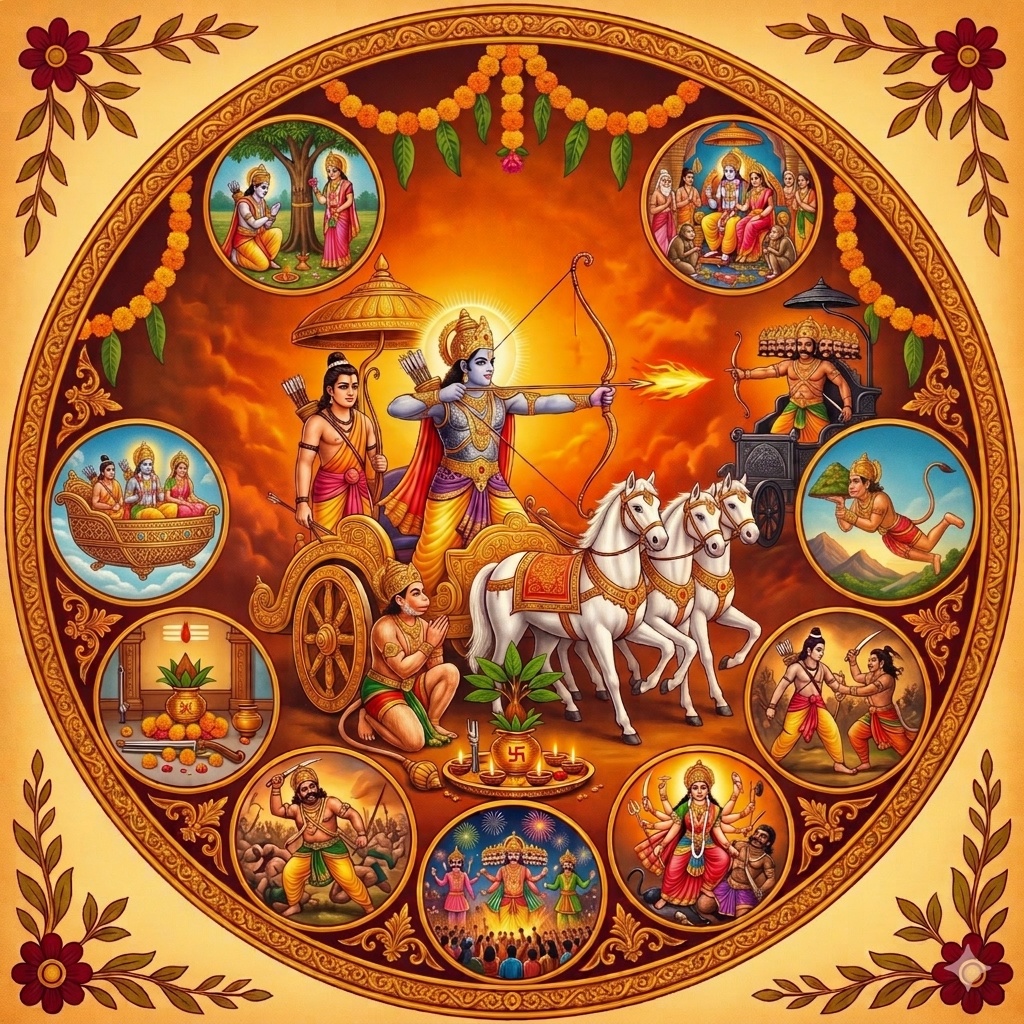
the day of Vijaya — the Shravana star, the Lord's setting out
उदये दशमी किंचित्संपूर्णैकादशी यदि । श्रवणर्क्षे यदा काले सा तिथिर्विजयाभिधा ॥ श्रवणर्क्षे तु पूर्णायां काकुत्स्थः प्रस्थितो यतः । उल्लंघयेयुः सीमानं तद्दिनर्क्षे ततो नराः ॥
If at sunrise (उदय) even a little of the Dashami (दशमी) is present and the Ekadashi (एकादशी) fills the day, and the star is Shravana (श्रवण) at the hour of the rite, that tithi is called Vijaya (विजया). Because Lord Rama (काकुत्स्थ) set out on the full Dashami under the Shravana star, on this day people cross the boundary (सीमा) under that star.
श्री६
the Vijaya hour — just after twilight
ईषत्संध्यामतिक्रान्तः किंचिदुद्भिन्नतारकः । विजयो नाम कालोयं सर्वकार्यार्थसिद्धिदः ॥
When the twilight (संध्या) has just passed and a few stars (तारका) have come out — this hour, named Vijaya (विजय), gives success (सिद्धि) in every undertaking.
श्री७
the shami — the Lord worshipped with it, then the tree
शमीयुक्तं जगन्नाथं भक्तानामभयङ्करम् । अर्चयित्वा शमीवृक्षमर्चयेच्च ततः पुनः ॥
Having worshipped the Lord of the world (जगन्नाथ), who makes his devotees (भक्त) fearless (अभयङ्कर), with the shami (शमी), one should then worship the shami tree (शमीवृक्ष) itself.
श्री८
the shami's prayer
अमङ्गलानां शमनीं शमनीं दुष्कृतस्य च । दुःस्वप्ननाशिनीं धन्यां प्रपद्येहं शमीं शुभाम् ॥
I take refuge in the auspicious (शुभा) shami (शमी), the blessed one (धन्या), who calms (शमनी) ill omens (अमङ्गल) and wrong-doing (दुष्कृत) and destroys bad dreams (दुःस्वप्न).
श्री९
the shami's prayer — the journey to come
शमी शमयते पापं शमी लोहितकण्टका । धारिण्यर्जुनबाणानां रामस्य प्रियवादिनी ॥ करिष्यमाणयात्रायां यथाकालं सुखं मया । तत्र निर्विघ्नकर्त्री त्वं भव श्रीरामपूजिते ॥
The shami (शमी) takes away sin (पाप); the shami, red-thorned (लोहितकण्टका), bore Arjuna's (अर्जुन) arrows (बाण) and spoke kindly to Lord Rama (राम). In the journey (यात्रा) I am to make, at its proper time and in comfort, be the remover of obstacles (निर्विघ्नकर्त्री), O you whom Shri Rama worshipped (श्रीरामपूजिता).
श्री१०
the earth from the shami's root, brought home
गृहीत्वा साक्षतामार्द्रां शमीमूलगतां मृदम् । गीतवादित्रनिर्घोषैरानयेत्स्वगृहं प्रति । ततो भूषणवस्त्रादि धारयेत्स्वजनैः सह
Taking the moist earth (मृद्) at the shami's root (शमीमूल), with unbroken rice (अक्षत), one should bring it home with the sound of songs and instruments (गीतवादित्र); then put on ornaments and clothes (भूषणवस्त्र) with one's own people (स्वजन).
श्री११
Goddess Aparajita — her praise
हारेण तु विचित्रेण भास्वत्कनकमेखला ॥ अपराजिता भद्ररता करोतु विजयं मम ॥
Adorned with her wondrous necklace (हार) and her shining golden ornaments, may Goddess Aparajita (अपराजिता), the giver of welfare (भद्ररता), bring me victory (विजय).