श्री१
the rule of the day — the Navami joined with the Ashtami
श्रावणी दुर्गनवमी दूर्वा चैव हुताशनी । पूर्वविद्धा प्रकर्तव्या शिवरात्रिर्बलेर्दिनम् ॥
Six days are kept when their tithi is joined with the one before it (पूर्वविद्धा): the Shravani (श्रावणी), Goddess Durga's Navami (दुर्गानवमी), the Durva Ashtami (दूर्वाष्टमी), the day of Holi's fire (हुताशनी), Shivaratri (शिवरात्रि) and Bali's day (बलिदिन) — so Maha Navami is kept on the day the Navami is joined with the Ashtami.
श्री२
the Navami joined with Mula and the two stars after it
दुर्गापूजा तु नवमी मूलाद्यृक्षत्रयान्विता । महती कीर्तिता तस्या दुर्गा महिषमर्दिनी ॥
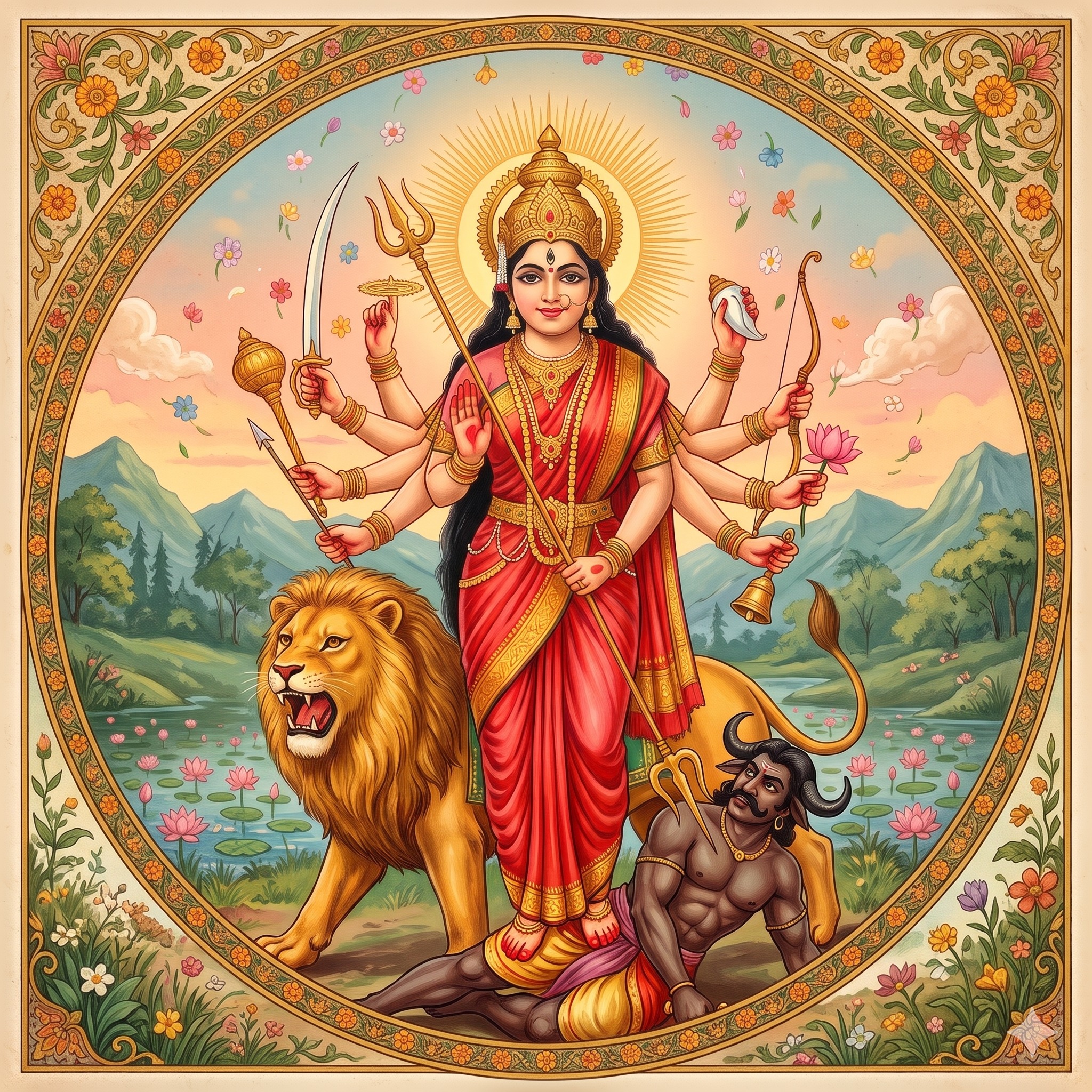
When the Navami (नवमी) of Goddess Durga's worship (दुर्गापूजा) falls with Mula (मूल) or one of the two stars that follow it, it is called the great Navami (महती); on that day Goddess Durga is worshipped as Mahishamardini (महिषमर्दिनी), the slayer of the demon Mahisha.
श्री३
the Navami's fast (उपवास) — its merit
तस्मादियं महापुण्या नवमी पापनाशिनी । उपोष्या सुप्रयत्नेन सततं सर्वपार्थिवैः ॥
Therefore this Navami (नवमी) is a day of the highest merit (महापुण्या) and the destroyer of sin (पापनाशिनी); every king (पार्थिव) should keep its fast (उपवास) with great care, year after year.
श्री४
the rule of the day — even a little of the Navami counts as the whole
आश्वयुक्छुक्लनवमी मुहूर्तं वा कला यदि । सा तिथिः सकला ज्ञेया लक्ष्मीविद्याजयार्थिभिः ॥
If the Navami (नवमी) of Ashwina's bright fortnight is present even for a muhurta (मुहूर्त) or a moment (कला), those who seek wealth (लक्ष्मी), learning (विद्या) and victory (जय) should count that tithi (तिथि) as whole (सकला).
श्री५
the homa (होम) — what is offered and how
पायसं सर्पिषा युक्तं तिलैः शुक्लैर्विमिश्रितम् । होमयेद्विधिवद्भक्त्या दशांशेन नृपोत्तम ॥ रुद्राध्याये यथा होम मंत्रेणैकेन साधयेत् । तथा स्तोत्रजपे होमं श्लोकेनैकेन साधयेत् ॥
Payasa (पायस) mixed with ghee (घृत) and white sesame (श्वेत तिल) is offered into the fire (होम) by rule and with devotion (भक्ति), the offerings numbering a tenth (दशांश) of the japa (जप), O best of kings. As in the Rudradhyaya (रुद्राध्याय) one offering is made with each mantra (मन्त्र), so in the japa of the hymn (स्तोत्र) one offering is made with each verse (श्लोक).
श्री६
the Navami's puja and the acharya's dakshina (दक्षिणा)
नवम्यां पूर्ववत्पूजा कर्तव्या भूतिमिच्छता । दक्षिणां वस्त्रयुग्मं च आचार्याय निवेदयेत् ॥
On the Navami (नवमी) one who seeks prosperity (भूति) should worship (पूजा) the Goddess as on the days before, and offer the acharya (आचार्य) who conducts the worship his dakshina (दक्षिणा) and a pair of clothes (वस्त्रयुग्म).
श्री७
the afternoon (अपराह्ण) — the Goddess carried through the land in her chariot (रथ)
ततोऽपराह्णसमये नवम्यां वै रथे स्थिताम् ॥ भवानीं भ्रामयेद्राष्ट्रे स्वयं राजा सशब्दवान् ।
Then, in the afternoon (अपराह्ण) of the Navami (नवमी), the king himself, with music sounding, should carry Goddess Bhavani (भवानी), seated in her chariot (रथ), in procession through his realm (राष्ट्र).