VishnuhoraFestivals

Delhi · श्री विक्रम संवत २०८७Vikram Samvat 2087
फाल्गुन कृष्ण पक्ष · चतुर्दशीPHALGUNA · KRISHNA PAKSHA · CHATURDASHI · 2031(Magha amanta)
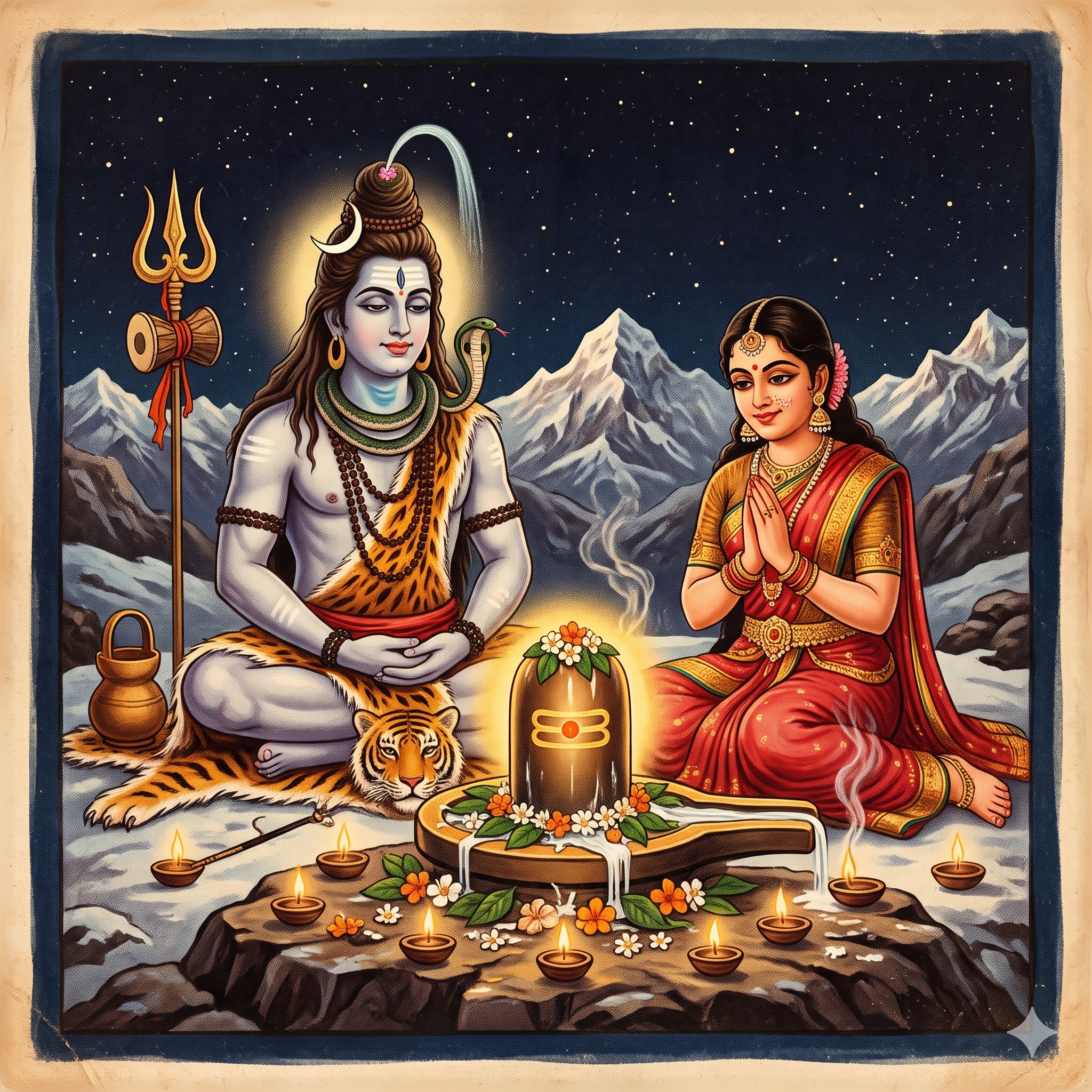
Maha Shivaratri, in the old calendar art

चतुर्दशी २:४४ से गुरुवार ११:५५ तकChaturdashi from 02:44 to Thursday 23:55 · Delhi

अमावस्याचतुर्दशी until 23:55Maha Shivaratri at midnight

महा शिवरात्रि

Maha Shivaratri

२०20फरवरी २०३१ · February 2031
गुरुवार · Thursday

Maha Shivaratri is the night most dear to Lord Shiva, the Chaturdashi of the dark fortnight of Magha or Phalguna.

इस दिनKept on Thursday 20 February.

समयthe day's timings, Delhi

महा शिवरात्रिMaha Shivaratri
00:10 – 01:00गुरुवार निशीथ १२:१० – १:०० · midnight (Nishita)
Midnight (निशीथ), the night's eighth muhurta (मुहूर्त), is the hour that fixes the night: the Chaturdashi that holds it is Maha Shivaratri, and Lord Shiva is worshipped through the four praharas (प्रहर) of the night. The vrata brings the highest merit when the night falls on a Sunday or a Tuesday, or when the Shiva yoga (शिवयोग) runs: इदं व्रतं रविवारभौमवारयोगे शिवयोगयोगे चातिशस्तम् ।
चतुर्दशीChaturdashi
02:44 → Thu 23:55गुरुवार २:४४ से गुरुवार ११:५५ तक
Chaturdashi begins at 02:44 on Thursday (२:४४) and runs until 23:55 on Thursday (११:५५).
चन्द्रोदयmoonrise
06:20६:२०
Sunrise 06:55, sunset 18:15; the next sunrise 06:55.

श्लोकfrom the scriptures

निर्णयwhy this is the day

Chaturdashi begins at 02:44 on Thursday (२:४४) and runs until 23:55 on Thursday (११:५५).

नियम पूरा · the rule in full

Magha Krishna Chaturdashi: the day the tithi covers Nishita; when it does so on two days, the second — but the first when the first holds the whole of Nishita and the second only part of it.

अन्य परम्पराother traditions

When the Chaturdashi holds midnight on both nights, some traditions keep the earlier night. Some traditions reckon the night by its dusk (Pradosh) rather than by its midnight: when the Chaturdashi begins within four ghatis (96 minutes) after sunset on the Trayodashi, they keep the vrata that same night. Some traditions break the fast as the Chaturdashi ends, if it ends within the first three praharas (प्रहर) of the next day. If it runs longer, they break the fast in the morning, while the Chaturdashi still runs. Others always end the fast with the parana (पारणा) while the Chaturdashi still runs.

विधिhow it is done

  1. On the Trayodashi, the day before, take one meal (एकभक्त).
  2. On the Chaturdashi morning, after the bath (स्नान) and the daily rites, put on the tilak of sacred ash (भस्म) and a rudraksha mala (रुद्राक्षमाला), and worship Lord Shiva at his temple.
  3. Then take the vow (संकल्प) of the Shivaratri vrata with flowers, unbroken rice (अक्षत) and water in hand; its words are the fourth leaf of the verses.
  4. Keep the fast (उपवास) through the day and repeat Lord Shiva's mantra as you are able: "Om Namah Shivaya", or "Shivaya Namah" for women and for those who do not wear the sacred thread (यज्ञोपवीत).
  5. If you are ill, frail or elderly, take fruit (फलाहार) by day and keep the night's worship; to keep it without even fruit, as you are able, brings the highest merit.
  6. In the evening take the bath (स्नान) again. At nightfall, wearing the tilak and the rudraksha, worship Lord Shiva facing east or north, at his temple or at home before a Narmadeshvara linga (नर्मदेश्वर शिवलिंग). Then take the vow (संकल्प) of the worship in these words: ममाखिलपापक्षयपूर्वकसकलाभीष्टसिद्धये शिवप्रीत्यर्थं च शिवपूजनमहं करिष्ये। Its meaning: I shall worship Lord Shiva to please him, that all my sins may end (पापक्षय) and every wish be fulfilled.
  7. In each of the night's four praharas (प्रहर), bathe Lord Shiva with panchamrita (पंचामृत), made of milk, curd, ghee (घी), honey and sugar; then offer the abhisheka (अभिषेक) with a stream of water (जलधारा), worshipping him as Shivaya (शिवाय) in the first prahara, Shankaraya (शंकराय) in the second, Maheshvaraya (महेश्वराय) in the third and Rudraya (रुद्राय) in the fourth.
  8. धत्तूरकरवीरकुसुमैर्बिल्वपत्रैश्च पूजनमतिप्रशस्तम् ॥ पुष्पाभावे शालितंडुलगोधूमयवैः पूजा ॥ Worship with datura and karavira (करवीर) flowers and with bilva leaves brings the highest merit; where there are no flowers, worship with rice (तण्डुल), wheat (गोधूम) and barley (यव). Worship Lord Shiva with the season's fruits and flowers (पुष्प), sandal paste (गन्ध), bilva leaves (बिल्वपत्र), datura (धतूरा), incense (धूप), the lamp (दीप) and food (नैवेद्य); if you cannot worship in every prahara, worship in the first without fail.
  9. Offer the handful of flowers (पुष्पांजलि) with his eight names: Bhava, Sharva, Rudra, Pashupati, Ugra, Mahan, Bhima and Ishana; some offer twelve handfuls with his twelve names.
  10. Then offer aarti (आरती), walk around the Lord in parikrama (परिक्रमा), offer pranam (प्रणाम) and close with the prayer for the vow's completion (the second leaf).
  11. Keep the night vigil (जागरण) all night long.
  12. The next morning take the bath (स्नान) again, worship Lord Shankara and then end the fast with the parana (पारणा).

ॐ नमः शिवायOm Namah Shivaya

कथाthe story

Maha Shivaratri is the night most dear to Lord Shiva, the Chaturdashi of the dark fortnight of Magha or Phalguna. At its midnight Lord Shiva, the first God, appeared as the linga (लिंग), radiant as ten million suns. Where the months are counted to the new moon this fortnight is Magha's, and where they are counted to the full moon it is Phalguna's. Every Chaturdashi of a dark fortnight is a Shivaratri, and this is the great one. Lord Shiva told Goddess Parvati that no offering is as dear to him as the fast (उपवास) kept on this night. The worship of Lord Shiva and the night vigil (जागरण) are the heart of this vrata, which is known as the king of vratas (व्रतराज). One who fasts, keeps the vigil and worships Lord Shiva on this night is not born again; the vrata is said to give the fruit of the ashvamedha (अश्वमेध). Once Lord Brahma and Lord Vishnu each claimed to be the creator and master of all, and they raised their great weapons against each other. Then Lord Shiva appeared between them as a pillar of endless light, and their weapons fell quiet in that light.

Neither of them could find the beginning or the end of that light, and they asked how people would ever worship him. Then, in his compassion, Lord Shiva became the twelve Jyotirlingas. From that night he has been worshipped in this form. On Maha Shivaratri a hunter of the forest of Varanasi, who had found no game, sat all night in a bilva tree above a pool. Each time he drew his bow, water and bilva leaves (बिल्वपत्र) fell on a Shiva linga (शिवलिंग) below. So, without food or water and awake, he worshipped Lord Shiva through all four praharas (प्रहर) without knowing it. He let each deer go on its promise to return, and when they all came back together, he spared them. Then Lord Shiva appeared, named him Guha and promised that Lord Rama would come to his house. He became Nishadaraja Guha, who welcomed Lord Rama as his guest at Shringaverapura.

व्रत कथा · the full katha will open here.

आसपास के दिनthe days around

अन्य वर्षother years, Delhi

२०२९ 2029Sun 11 Feb२०३० 2030Sat 2 Mar२०३१ 2031Thu 20 Feb२०३२ 2032२०३३ 2033

कौन · कहाँwho · where

Everyone, men and women, young and old; Lord Shiva's devotees above all, who keep the vrata of every Chaturdashi of the dark fortnight. In Kashi the night is the festival of Lord Vishvanatha, the lord of Kashi. In Bengal the day is called Shiva Chaturdashi (शिवचतुर्दशी), and men and women alike keep it as the wedding festival (विवाहोत्सव) of Lord Shiva and Goddess Parvati. Through the night's vigil (जागरण) they read the stories of Lord Shiva and Goddess Parvati and sing bhajans (भजन). Lord Shiva's abhisheka (अभिषेक) is offered with milk, curd, ghee (घी), honey and Ganga water (गंगाजल), and devotees offer him the things he loves most: bilva leaves (बिल्वपत्र), datura (धतूरा) and madar flowers (मदार). In Braj devotees keep the night's vigil (जागरण) and the vrata of the Chaturdashi for Lord Shiva. The temples of Braj's four Mahadevas draw great crowds from morning to night: Bhuteshvara in Mathura, Gopishvara in Vrindavan, Chakreshvara at Govardhan and Kameshvara at Kamavan. In Rajasthan Lord Shiva is worshipped with milk, flowers and leaves (पुष्प-पत्र); people fast through the day and stay awake through the night. In Himachal many fairs (मेले) are held on Shivaratri, above all at Mandi, the city of Shiva temples, and at Baijnath. Worshipped: Lord Shiva and Goddess Parvati.